LMS
LMS
Last updated on 30th May 2026| 11234

- Introduction to SAP FICO Tutorial for Freshers
- Financial Accounting (FI) Overview
- General Ledger Accounting
- Accounts Payable (AP) & Accounts Receivable (AR)
- Asset Accounting in SAP FICO
- Controlling (CO) Module Basics
- Cost Center & Profit Center Accounting
- Integration of FI & CO Modules
- Conclusion & Key Takeaways
Introduction to SAP FICO Tutorial for Freshers
SAP FICO Tutorial for Freshers is a core module in SAP ERP that combines Financial Accounting (FI) and Controlling (CO). It enables organizations to manage external financial reporting and internal cost tracking. Beginners are introduced to the importance of SAP FICO Training in ensuring compliance with accounting standards. The tutorial explains how FI handles company codes, ledgers, and fiscal year variants, while CO focuses on budgets and performance monitoring. Freshers learn how SAP FICO integrates with other modules like MM (Materials Management) and SD (Sales & Distribution). The section highlights how SAP FICO supports decision-making and financial transparency. Learners discover the role of master data in maintaining accuracy. The introduction also emphasizes career opportunities for SAP FICO consultants. It sets the stage for practical, step‑by‑step learning. By the end, freshers understand why SAP FICO is a cornerstone of enterprise finance.
Financial Accounting (FI) Overview
- Company Codes: Defines the smallest organizational unit for external reporting. Beginners learn how to configure company codes. This ensures compliance with legal requirements. It forms the foundation of FI processes.
- Chart of Accounts: Provides the structure for recording transactions. Freshers explore asset, liability, and expense accounts. It ensures consistency across financial reporting. Charts of accounts connect FI with business operations.
- Fiscal Year Variants: Determines how financial periods are structured. Learners configure monthly and yearly closing cycles in our SAP FICO Training. This supports accurate reporting and auditing. Variants align with organizational policies.
- Document Types: Classifies financial transactions like invoices and payments. Beginners practice posting entries with correct document types. This ensures clarity in reporting. Document types streamline accounting processes.
- Integration with Other Modules: FI integrates with MM, SD, and HR modules. Freshers learn how transactions flow across systems and SAP Analytics Cloud Tutorial For Beginners. This ensures transparency and efficiency. Integration supports holistic enterprise management.
Ready to earn your SAP HANA Professional Certification? Discover the SAP FICO Training now available at ACTE!
Asset Accounting in SAP FICO
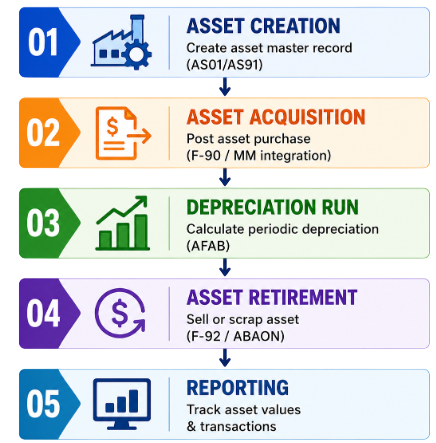
- Asset Master Data: Stores details of fixed assets like machinery and buildings. Beginners learn to create and maintain asset records. This ensures accurate tracking of asset lifecycle. Proper setup supports depreciation and reporting.
- Depreciation: SAP automates depreciation calculations. Freshers explore different methods like straight-line and declining balance and SAP SuccessFactors Tutorial. It ensures compliance with accounting standards. Depreciation impacts profit and loss reporting.
- Asset Transactions: Includes acquisitions, transfers, and retirements. Learners practice posting entries for asset purchases and disposals. This builds confidence in handling real-world scenarios. Accurate postings maintain financial integrity.
- Integration with FI: Asset Accounting links directly to the General Ledger. Beginners see how asset values flow into financial statements. This integration ensures transparency and SAP CRM Tutorial. It supports audit readiness and compliance.
- Reporting: Provides detailed asset reports like balance sheets and depreciation schedules. Freshers learn to generate and analyze these outputs. Reporting supports management decisions. It connects asset management with financial strategy.
- Vendor Master Data: Stores details of suppliers for AP processes. Beginners learn to configure vendor records. This ensures accurate invoice posting. Vendor data supports payment management.
- Customer Master Data: Holds information about customers for AR. Freshers practice creating customer accounts. This supports billing and collections. Accurate data ensures reliable reporting.
- Invoice Posting: AP handles vendor invoices, while AR manages customer billing. Learners practice posting entries and SAP PP Tutorial. This builds confidence in transaction handling. Invoice posting supports cash flow management.
- Payment Processing: AP ensures timely vendor payments. AR tracks incoming customer payments. Beginners learn reconciliation techniques. Payment processing supports financial accuracy.
- Dunning Process: Automates reminders for overdue payments. Freshers configure dunning levels. This improves collections efficiency. Dunning supports healthy cash flow.
- Instructor-led Sessions
- Real-life Case Studies
- Assignments
- Cost Elements: Represent categories of expenses. Beginners learn to configure primary and secondary cost elements, which supports accurate cost tracking and links FI with CO.
- Cost Centers: Represent departments incurring costs. Freshers assign expenses to cost centers, with practical guidance available in the SAP S/4HANA Tutorial for Beginners, ensuring accountability in spending and supporting efficiency tracking.
- Internal Orders: Track costs for specific projects. Beginners practice creating internal orders, which supports project budgeting and improves financial control.
- Planning & Budgeting: CO supports planning future expenses. Learners configure budgets for departments to ensure resource optimization and alignment with organizational goals.
- Reporting: Generates reports on costs and variances. Beginners learn to interpret outputs, with deeper insights provided in the SAP HANA Tutorial Complete Guide For Freshers, helping highlight efficiency gaps and connect operations with financial strategy.
- Transaction Flow: FI transactions automatically reflect in CO. Beginners learn how expenses posted in FI are analyzed in CO, reducing duplication and ensuring accuracy in reporting.
- Real-Time Reporting: Integration supports instant financial insights. Freshers explore how reports combine FI and CO data, improving decision-making and enhancing transparency.
- Consistency: Ensures uniformity across departments. Learners discover how integration prevents discrepancies, with structured learning available in SAP FICO Training, which supports compliance and builds trust in financial systems.
- Efficiency: Integration reduces manual effort. Beginners practice scenarios where FI and CO work together, saving time and resources. Practical exercises in the SAP SD Tutorial for Freshers demonstrate how efficiency supports business agility.
- Holistic View: FI and CO together provide a complete picture. Freshers learn how integration connects external and internal reporting, supporting strategic planning and preparing learners for advanced SAP modules.
Asset Accounting in SAP FICO
Get Your SAP HANA Certification by Learning from Industry-Leading Experts and Advancing Your Career with ACTE’s SAP FICO Training.
General Ledger Accounting
General Ledger (GL) is the backbone of SAP FI, recording all business transactions. Beginners learn how GL ensures accuracy in financial reporting. The tutorial explains how to configure charts of accounts and posting periods. Freshers practice posting journal entries for invoices, payments, and adjustments. GL also supports reconciliation between sub‑ledgers and main accounts. Learners explore how GL integrates with AP and AR modules and SAP Projects Tutorial. Period closing activities like accruals and adjustments are introduced. Reporting tools generate balance sheets and profit & loss statements. GL ensures compliance with accounting standards and audit readiness. By mastering GL, beginners gain confidence in handling real-world accounting tasks.
Accounts Payable (AP) & Accounts Receivable (AR)

Asset Accounting in SAP FICO
Asset Accounting manages fixed assets like machinery, buildings, and vehicles. Beginners learn how to create and maintain asset master data. The tutorial explains depreciation methods such as straight-line and declining balance. Freshers practice posting asset acquisitions, transfers, and retirements. Asset Accounting integrates directly with the General Ledger. Learners discover how asset values flow into financial statements and SAP Internship Tutorial for Freshers. Reporting tools generate balance sheets and depreciation schedules. Asset Accounting ensures compliance with accounting standards. It supports audit readiness and financial transparency. By mastering this module, beginners gain skills in managing the full lifecycle of assets.

Get JOB Oriented SAP FICO Training for Beginners By MNC Experts
Controlling (CO) Module Basics
Set to Ace Your AWS Job Interview? Check Out Our Blog on SAP FICO Interview Questions & Answer
Cost Center & Profit Center Accounting
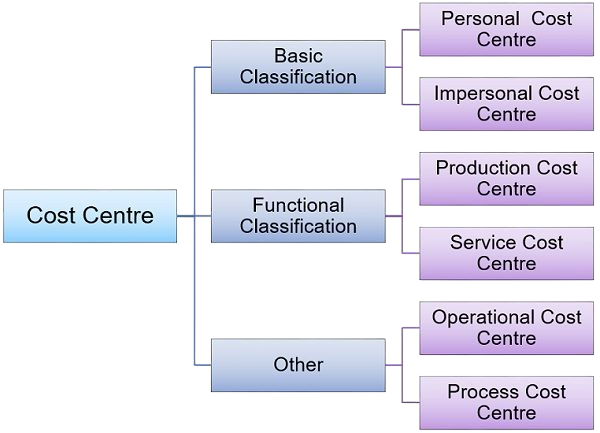
Cost Center and Profit Center Accounting are essential for monitoring organizational performance. Cost Centers represent departments or units incurring expenses, ensuring accountability in spending, while Profit Centers focus on revenue and profitability, helping measure business performance by product or division. Beginners learn how allocations distribute costs fairly across centers, and reporting tools generate detailed cost and profit reports for management. Freshers explore how these centers integrate with FI and CO modules, with practical examples provided in the SAP ABAP Tutorial with Examples For Beginners, which demonstrates how technical configurations support financial transparency and efficiency. Learners discover how cost and profit centers support strategic decision-making, connecting financial data with operational performance. By mastering them, beginners gain skills in analyzing profitability and efficiency.
Integration of FI & CO Modules
Conclusion & Key Takeaways
SAP FICO Tutorial for Freshers provides a comprehensive framework for managing both external and internal financial processes. Beginners gain hands-on experience by posting transactions and generating reports. The tutorial emphasizes integration skills, showing how FI and CO work together seamlessly. Freshers discover career opportunities in accounting, auditing, and ERP consulting. SAP FICO expertise opens global opportunities across industries. Learners also gain future readiness, as SAP FICO Training evolves with business needs. Continuous learning ensures adaptability to advanced modules and updates. This tutorial builds strong career foundations for freshers. It connects theory with practical application in enterprise finance. By completing this tutorial, learners are prepared for professional success in SAP FICO.